Silicified Microcrystalline Cellulose (SMCC) – Pharmaceutical Excipient

- Wonsen
- China
- 30 days
- Always supply
Silicified Microcrystalline Cellulose (SMCC) is a co-processed pharmaceutical excipient designed to improve powder flowability and tablet compressibility. Ideal for direct compression, tablet manufacturing and capsule formulations.
Silicified Microcrystalline Cellulose (SMCC)
Product Overview
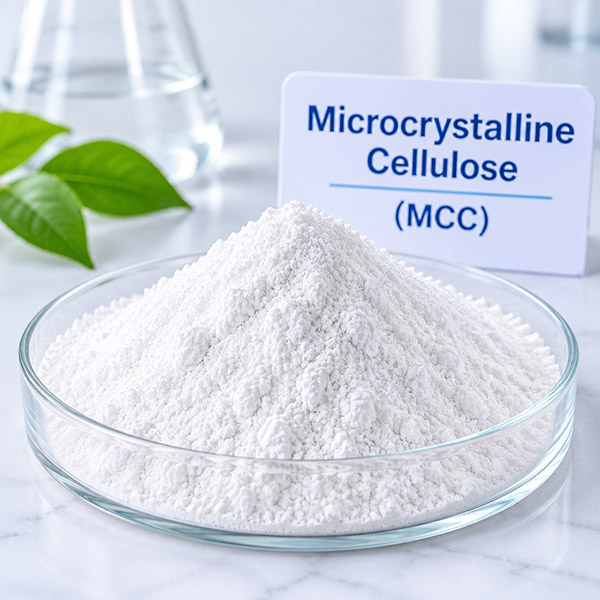
Silicified Microcrystalline Cellulose (SMCC) is a high-performance co-processed pharmaceutical excipient composed of Microcrystalline Cellulose (MCC) and Colloidal Silicon Dioxide (CSD).
Through a specialized co-processing process, these two components are intimately associated to provide improved powder flowability and excellent compression properties.
SMCC is widely used in pharmaceutical solid dosage formulations, particularly in tablet manufacturing and capsule production. It combines the binding and compressibility characteristics of microcrystalline cellulose with the flow-enhancing properties of colloidal silicon dioxide.
Key Features and Benefits
1. Improved Powder Flowability
The addition of colloidal silicon dioxide helps improve powder flow, supporting more consistent powder handling and die filling during tablet production.
2. Excellent Compressibility
SMCC offers good compression and binding properties, helping manufacturers produce tablets with desirable mechanical strength.
3. Suitable for Direct Compression
SMCC is particularly suitable for direct compression formulations, helping simplify tablet manufacturing processes by reducing the need for additional granulation steps in suitable formulations.
4. Versatile Formulation Applications
It can be used in different solid dosage formulations, including tablets and powder-filled capsules.
5. Enhanced Formulation Performance
The combination of microcrystalline cellulose and colloidal silicon dioxide provides complementary functional properties, supporting formulation development and manufacturing efficiency.
Applications
Silicified Microcrystalline Cellulose is commonly used in:
Pharmaceutical tablet manufacturing
Direct compression formulations
Wet granulation formulations
Hard capsule formulations
Nutraceutical and dietary supplement formulations
Product Information
Product Name: Silicified Microcrystalline Cellulose
Abbreviation: SMCC
Product Category: Pharmaceutical Excipient
Main Components: Microcrystalline Cellulose and Colloidal Silicon Dioxide
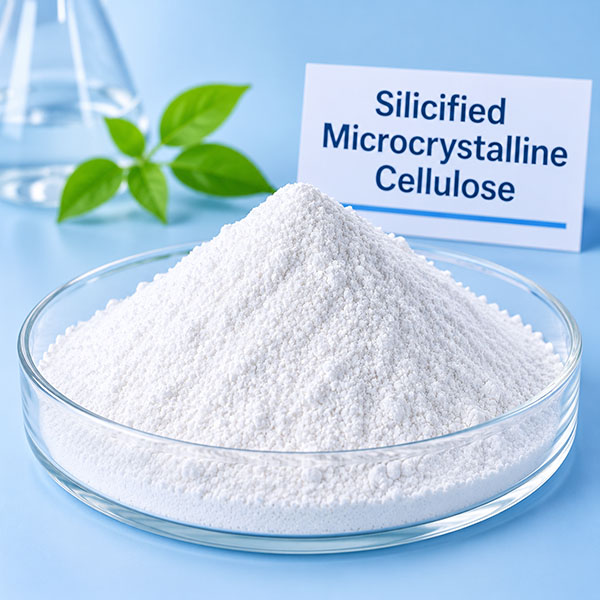
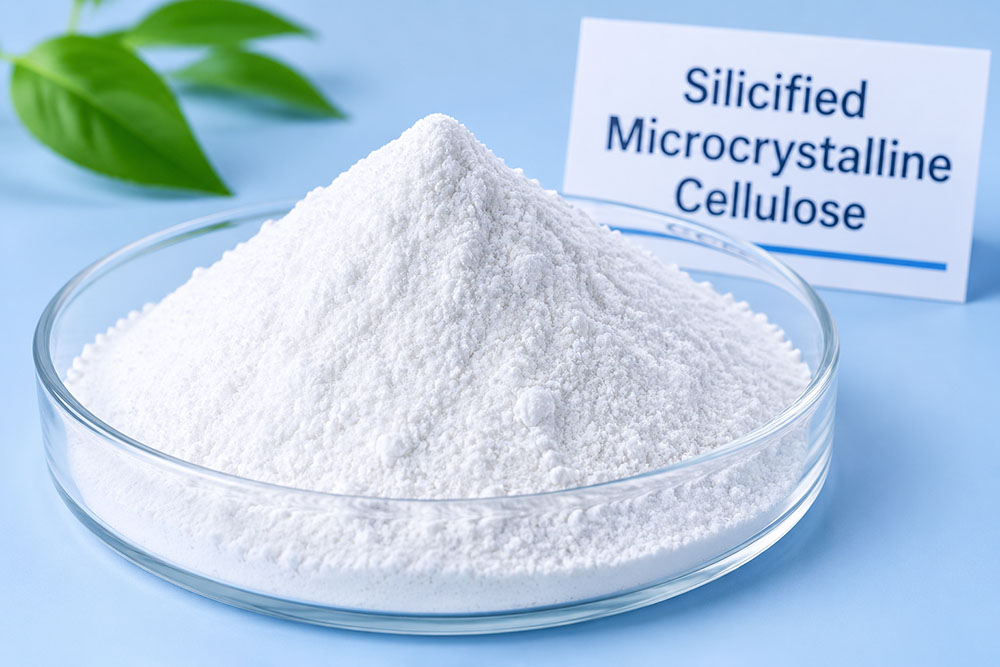
Appearance: White or almost white powder
Main Functions: Filler, binder and flow-enhancing excipient
Main Applications: Tablet and capsule manufacturing
For detailed specifications, available grades, packaging options and technical documentation, please contact our sales team.
Comply with USP, CP
Item | USP | CP |
Identification | Conforms | Conforms |
pH | 5.0-7.5 | 5.0-7.0 |
Ether-soluble Matter (%) | ≤0.05 | ≤0.05 |
Water-soluble Matter (%) | ≤0.25 | ≤0.25 |
Residue on Ignition/ Sulfated ash (%) | 1.8-2.2 | 1.8-2.2 |
Loss on drying (%) | ≤7.0 | ≤6.0 |
Conductivity(uS/cm) | ≤75 | ≤75 |
Degree of polymerization | ≤350 | ≤350 |
Heavy metal (%) | —— | ≤0.001 |
Particle Size: SH-SMCC50(μm) SH-SMCC90(μm) |
D50:40~75 D90:70~130 |
D50:40~75 D90:70~130 |
Microbial limits | Conforms | Conforms |
Cas No.: 9004-34-6 112945-52-5 HS Code: 39129000
Main Purpose: Used as a filler in tablets and capsules.
Package: 20kg/kraft bag or 20kg/fiber drum
Packing Size: 2.2cbm/mt (bag) or D37cm*H53cm(drum)
H.W.: 20.2kg(bag) or 22.5kg(drum)
FAQs
1. What is Silicified Microcrystalline Cellulose (SMCC)?
Silicified Microcrystalline Cellulose (SMCC) is a co-processed pharmaceutical excipient made from Microcrystalline Cellulose (MCC) and Colloidal Silicon Dioxide (CSD). It combines the binding and compression properties of MCC with the flow-enhancing characteristics of colloidal silicon dioxide.
2. What is Silicified Microcrystalline Cellulose used for?
SMCC is mainly used as a multifunctional excipient in pharmaceutical solid dosage formulations. Its common applications include tablet manufacturing, direct compression, wet granulation and hard capsule formulations.
3. What are the main benefits of SMCC in tablet manufacturing?
The main benefits include improved powder flowability, good compressibility, effective binding properties and versatile formulation performance. These characteristics can help improve powder processing and tablet production consistency.
4. What is the difference between Microcrystalline Cellulose (MCC) and Silicified Microcrystalline Cellulose (SMCC)?
MCC is widely used as a tablet filler and binder because of its excellent compressibility. SMCC combines MCC with colloidal silicon dioxide through a co-processing process, providing additional flow-enhancing properties while maintaining useful compression characteristics.
5. Can Silicified Microcrystalline Cellulose be used for direct compression?
Yes. SMCC is commonly used in direct compression formulations. Its combination of flowability and compressibility makes it a useful excipient for manufacturing tablets without a separate granulation process, depending on the formulation requirements.
6. Can SMCC be used in wet granulation?
Yes. SMCC can also be incorporated into wet granulation formulations. Its performance depends on the formulation composition, processing conditions and selected grade.
7. Is Silicified Microcrystalline Cellulose suitable for capsule manufacturing?
Yes. SMCC can be used in powder-filled hard capsule formulations. Its powder flow and formulation properties make it a useful option for capsule filling applications.
8. What is the appearance of Silicified Microcrystalline Cellulose?
Silicified Microcrystalline Cellulose is generally a white or almost white powder. Its particle size, bulk density and other physical properties may vary depending on the grade and manufacturer.
9. How should Silicified Microcrystalline Cellulose be stored?
SMCC should generally be stored in tightly closed containers in a clean, dry environment. Follow the manufacturer's recommended storage conditions and product documentation to maintain its quality.
10. What documents are available for Silicified Microcrystalline Cellulose?
Typical technical documents may include a Certificate of Analysis (COA), Technical Data Sheet (TDS) and Safety Data Sheet (SDS). Availability of pharmacopeial compliance documentation and other quality certificates depends on the specific product and manufacturer.
11. How can I choose the right grade of SMCC?
The appropriate grade depends on the formulation, powder flow requirements, compression performance, particle size and manufacturing process. Contact our sales team for product specifications and technical recommendations.