Microcrystalline Cellulose (MCC) | Pharmaceutical Excipient

- Wonsen
- China
- 30 days
- Always supply
Microcrystalline Cellulose (MCC) is a widely used pharmaceutical excipient in tablet and capsule manufacturing. It functions as a binder, diluent, and disintegrant, supporting tablet formulation and production. Explore its applications in pharmaceutical manufacturing.
Microcrystalline Cellulose (MCC)
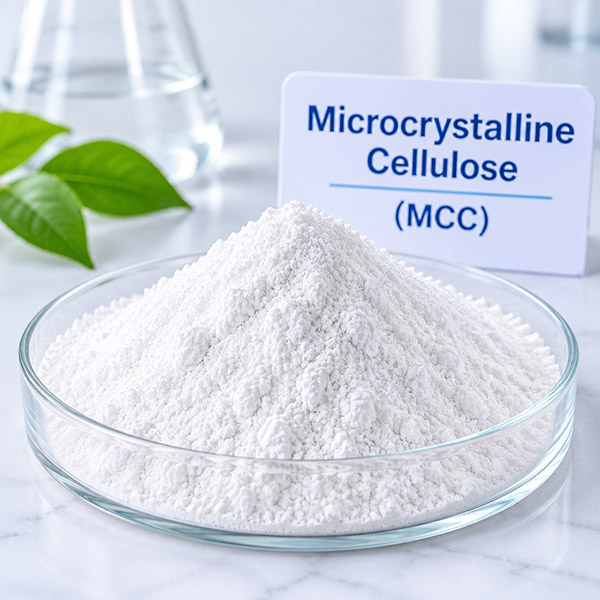
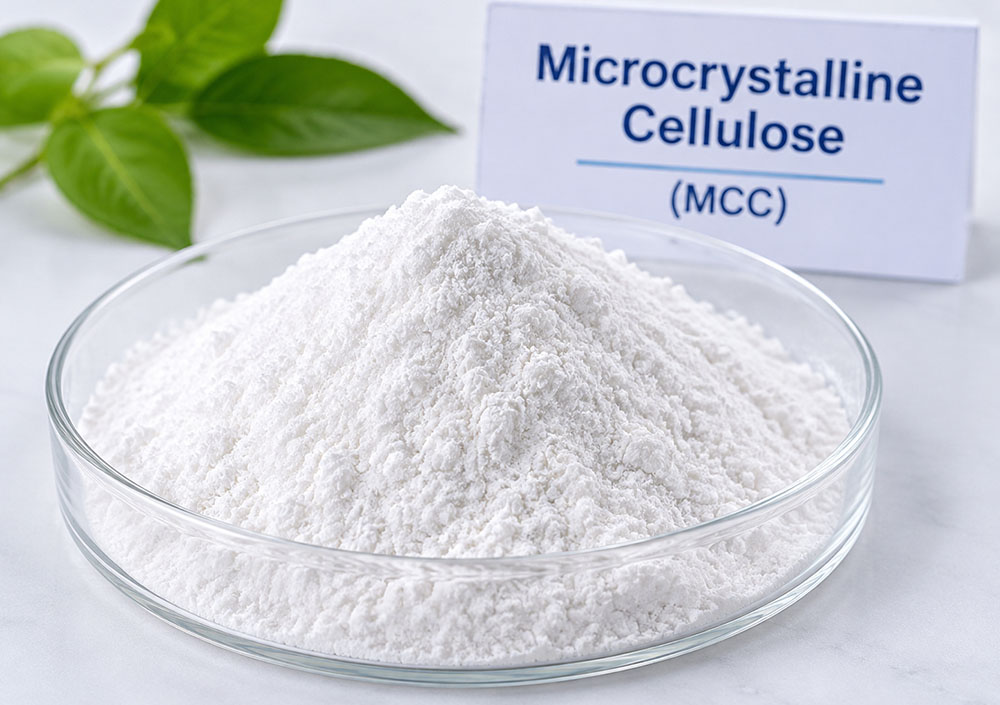
Microcrystalline Cellulose (MCC) is a purified, partially depolymerized cellulose widely used as a multifunctional excipient in the pharmaceutical industry. It is commonly available as a fine white or almost white, odorless powder.
MCC is widely used in tablet and capsule formulations due to its excellent compressibility, binding properties, and versatility. It serves as a filler, binder, and disintegrant in pharmaceutical formulations, helping manufacturers develop tablets with desirable mechanical strength and performance.
Key Applications:
Tablet Manufacturing: Used as a direct compression filler and binder to support tablet formation.
Capsule Formulations: Serves as a filler to achieve the desired formulation volume.
Tablet Disintegration: Helps tablets break apart when exposed to aqueous environments.
Pharmaceutical Formulations: Provides versatility in developing various solid dosage forms.
Microcrystalline Cellulose is an important pharmaceutical excipient for manufacturers seeking reliable formulation performance and efficient solid dosage production.
Comply with USP, BP, EP, CP
Item | USP/BP/EP | CP |
Identification | Conforms | |
Solubility | Conforms | |
pH | 5.0-7.5 | 5.0-7.5 |
Ether-soluble Substances (%) | ≤0.05 | ≤0.05 |
Water-soluble Substances (%) | ≤0.25 | ≤0.2 |
Residue on Ignition/ Sulfated ash (%) | ≤0.1 | ≤0.1 |
Loss on drying (%) | ≤7.0 | ≤7.0 |
Bulk Density (g/cm3) | Conforms | —— |
Conductivity(µS/cm) | ≤75 | ≤75 |
—— | ≤0.03 | |
Starch | —— | Conforms |
Arsenic (%) | —— | ≤0.0002 |
Heavy metal (%) | —— | ≤0.001 |
Particle Size: Retained 60 mesh (250microns) (%) Retained 200 mesh (74 microns)(%) |
≤1.0 ≤30.0 |
—— |
Microbial limits | Conforms | |
Cas No.: 9004-34-6 HS Code: 39129000
Main Purpose: Tablet and capsule diluent; tablet disintegrant.
Package: 20kg/kraft bag or 20kg/fiber drum
Packing Size: 2.2cbm/mt(bag) or D37cm*H53cm(drum)
G.W.: 20.2kg(bag) or 22.5kg(drum)
FAQ About Microcrystalline Cellulose
Q1: What is Microcrystalline Cellulose (MCC)?
Microcrystalline Cellulose (MCC) is a purified, partially depolymerized cellulose commonly used as a pharmaceutical excipient. It is widely applied in tablet and capsule manufacturing.
Q2: What is Microcrystalline Cellulose used for in the pharmaceutical industry?
MCC is mainly used as a binder, filler, diluent, and disintegrant in pharmaceutical formulations. It helps improve tablet compressibility and supports the production of solid dosage forms.
Q3: Why is Microcrystalline Cellulose used in tablet manufacturing?
MCC is valued for its excellent compressibility and binding properties. It helps form tablets with good mechanical strength and is suitable for direct compression processes.
Q4: Is Microcrystalline Cellulose suitable for direct compression?
Yes. Certain grades of Microcrystalline Cellulose are widely used in direct compression tablet manufacturing because of their good compactibility and flow characteristics. The appropriate grade depends on the formulation and production requirements.
Q5: Can Microcrystalline Cellulose be used in capsule formulations?
Yes. MCC can be used as a filler or diluent in capsule formulations, helping achieve the required fill volume and formulation characteristics.
Q6: What does MCC stand for in pharmaceutical excipients?
MCC stands for Microcrystalline Cellulose. It is a widely recognized multifunctional excipient used in pharmaceutical solid dosage manufacturing.
Q7: What is the difference between Microcrystalline Cellulose and powdered cellulose?
Both materials are cellulose-based excipients, but they differ in their manufacturing processes, physical properties, and functional characteristics. MCC is partially depolymerized and is particularly valued for its compressibility and binding properties.
Q8: What factors should be considered when selecting Microcrystalline Cellulose?
Important factors include particle size, bulk density, moisture content, compressibility, flowability, intended application, and applicable pharmaceutical quality standards. The selection should be based on the specific formulation and manufacturing process.