Hydroxypropyl Cellulose (HPC) – Pharmaceutical Excipient

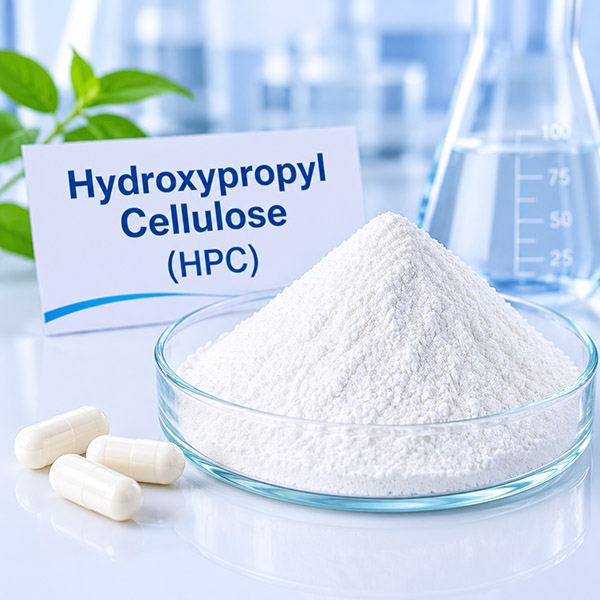
- Wonsen
- China
- 30 days
- Always supply
Hydroxypropyl Cellulose (HPC) is a versatile pharmaceutical excipient used as a binder, film-forming agent, thickener, and stabilizer in pharmaceutical formulations. Explore its applications and properties.
Hydroxypropyl Cellulose (HPC)
Hydroxypropyl Cellulose (HPC) is a nonionic, water-soluble cellulose ether widely used as a functional pharmaceutical excipient. It is produced by chemically modifying cellulose with hydroxypropyl groups, providing excellent film-forming, binding, and thickening properties.
In pharmaceutical manufacturing, Hydroxypropyl Cellulose is commonly used as a tablet binder, film-coating agent, viscosity modifier, and stabilizer. It helps improve formulation consistency, tablet strength, and coating performance.
HPC is suitable for various pharmaceutical applications, including tablet manufacturing, wet granulation, film coating, and other solid dosage formulations. Its versatility makes it a valuable ingredient for pharmaceutical manufacturers seeking reliable excipient solutions.
Item | USP,BP,EP | CP |
Identification | Conforms | |
Loss on drying (%) | ≤ 5.0 | ≤ 5.0 |
Residue on ignition/Sulfated ash (%) | ≤0.8 | ≤0.8 |
Chlorides (%) | —— | ≤0.15 |
Silica(%) | ≤0.6 | ≤0.6 |
Assay (%) | 53.4-80.5 | |
pH | 5.0-8.0 | |
Lead(ppm) | ≤10(USP) | —— |
Arsenic (%) | —— | ≤0.002 |
Heavy metal (%) | —— | ≤0.001 |
Microbial limits | Conforms | |
Cas No.: 9004-64-2 HS Code: 39129000
Main Purpose: Tablet binders and disintegrants.
Package: 20kg/kraft bag or 20kg/fiber drum
Packing Size: 1.8cbm/mt(bag) or D37cm*H53cm(drum)
G.W.: 20.2kg(bag) or 22.5kg(drum)
FAQs
Q1: What is Hydroxypropyl Cellulose (HPC)?
Hydroxypropyl Cellulose (HPC) is a nonionic cellulose ether used as a pharmaceutical excipient. It provides binding, film-forming, thickening, and stabilizing properties in various pharmaceutical formulations.
Q2: What is Hydroxypropyl Cellulose used for in pharmaceutical manufacturing?
HPC is commonly used as a tablet binder, film-coating agent, viscosity modifier, and stabilizer. It is widely applied in tablet manufacturing, wet granulation, and pharmaceutical coating processes.
Q3: Is Hydroxypropyl Cellulose water-soluble?
Yes. Hydroxypropyl Cellulose is generally soluble in water, although its solubility and solution properties depend on the molecular weight and grade. It also has solubility in certain polar organic solvents.
Q4: Can Hydroxypropyl Cellulose be used as a tablet binder?
Yes. HPC is widely used as a tablet binder. It helps improve powder adhesion, granule formation, and tablet mechanical strength during pharmaceutical manufacturing.
Q5: Can HPC be used in pharmaceutical film coating?
Yes. Hydroxypropyl Cellulose has excellent film-forming properties and can be used in pharmaceutical coating formulations to help produce uniform and consistent coating films.
Q6: What is the difference between Hydroxypropyl Cellulose (HPC) and Hydroxypropyl Methylcellulose (HPMC)?
HPC and HPMC are both cellulose derivatives, but they have different chemical structures and functional properties. HPC contains hydroxypropyl groups, while HPMC contains both hydroxypropyl and methyl groups. Their solubility, viscosity, and film-forming characteristics differ, making them suitable for different formulation requirements.
Q7: What factors should be considered when selecting Hydroxypropyl Cellulose?
Important factors include viscosity grade, molecular weight, solubility, substitution level, intended pharmaceutical application, and applicable pharmaceutical quality standards. The appropriate grade should be selected according to the specific formulation requirements.
Q8: Is Hydroxypropyl Cellulose suitable for solid dosage forms?
Yes. HPC is widely used in solid dosage forms, particularly tablets and granules, where it serves as a binder, film former, and functional formulation ingredient.