Dihydroxyaluminum Aminoacetate USP | Pharmaceutical Raw Material

- Wonsen
- China
- 30 days
- Always supply
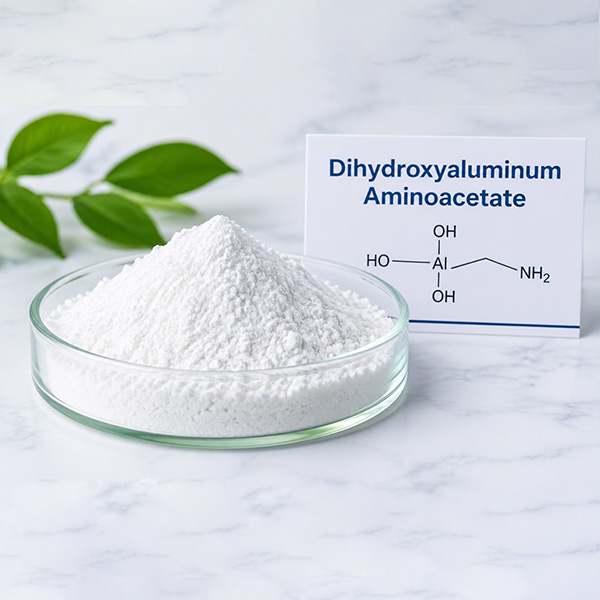
Dihydroxyaluminum Aminoacetate, also known as Aluminum Glycinate, is a pharmaceutical raw material used in antacid formulations and pharmaceutical applications. Available with USP quality standards. Contact us for product specifications and quotations.
Dihydroxyaluminum Aminoacetate
Name: Dihydroxyaluminum Aminoacetate
M.F.: C2H6AlNO4 · xH2O
M.W.: 135.05 (Average value)
CAS No.: 41354-48-7(Hydrate) ; 13682-92-3 (Anhydrous)
Packaging: 1kg/bag/carton; 5kg/bag/carton; 20kg/bag/drum
Appearance:
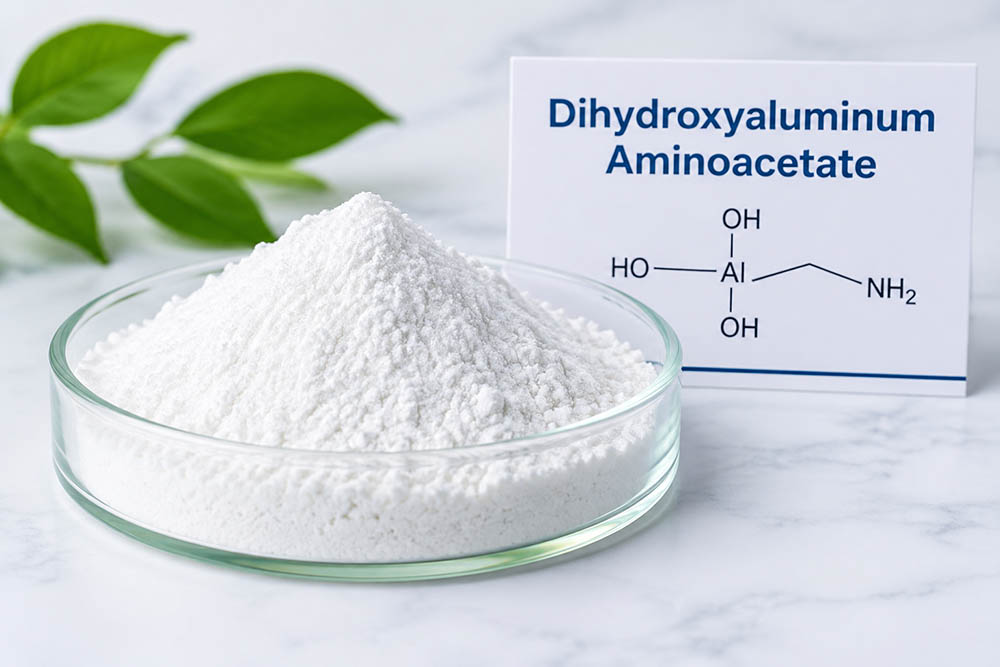
White, odorless powder having a faintly sweet taste. Soluble in dilute mineral acids and in solutions of fixed alkalies; insoluble in water and in organic solvents.
Quality Standard: USP2024
Introduction:
Dihydroxyaluminum Aminoacetate, also known as Aluminum Glycinate, is an aluminum-based pharmaceutical ingredient used in pharmaceutical formulations.
It is commonly used as an active ingredient in antacid preparations and can also serve as a cross-linking agent in hydrogel patch formulations.
With its pharmaceutical applications and established USP monograph, Dihydroxyaluminum Aminoacetate is an important ingredient for pharmaceutical manufacturers.
Product Highlights:
Also known as Aluminum Glycinate.
Available in white powder form.
Used in antacid formulations.
Suitable for pharmaceutical formulation development.
USP quality standard available, subject to product specifications.
Features:
Dihydroxyaluminum Aminoacetate is used as API to neutralize gastric acid. It has a stronger effect than aluminum hydroxide, takes effect more quickly than aluminum hydroxide, and has a strong anti-pepsin effect. As a pharmaceutical excipient, it is generally used in cataplasms as a cross-linking agent for cataplasms. Currently, almost all foreign hydrogel patches use aluminum glycolate as a cross-linking agent.
Application:
Dosage Form Application Gel Patch Cross-linking agent
Advantages:
■ Stable molecular weight and high reactivity of aluminum ions, resulting in superior gel viscosity.
■ Compliance with the United States Pharmacopeia (USP) standards.
Storage: Preserve in well-closed containers.
Contact us for detailed specifications, COA, packaging information, and quotations.
FAQs About Dihydroxyaluminum Aminoacetate
Q1: What is Dihydroxyaluminum Aminoacetate?
Dihydroxyaluminum Aminoacetate is an aluminum-based compound also known as Aluminum Glycinate or Dihydroxyaluminum Glycinate. It is used in pharmaceutical formulations, particularly antacid preparations.
Q2: What is the CAS number of Dihydroxyaluminum Aminoacetate?
The CAS number depends on the chemical form. The anhydrous form is commonly identified as CAS No. 13682-92-3, while the hydrated form is identified as CAS No. 41354-48-7.
Q3: What is the molecular formula of Dihydroxyaluminum Aminoacetate?
The anhydrous compound has the molecular formula C₂H₆AlNO₄. Hydrated forms may contain additional water molecules.
Q4: What is Dihydroxyaluminum Aminoacetate used for?
It is mainly used as an active ingredient in antacid formulations. It can also be used as a cross-linking agent in certain hydrogel patch formulations.
Q5: What does Dihydroxyaluminum Aminoacetate look like?
It is generally supplied as a white powder with no noticeable odor.
Q6: Is Dihydroxyaluminum Aminoacetate available in USP grade?
Yes. Dihydroxyaluminum Aminoacetate is included in the United States Pharmacopeia (USP-NF). Specific product compliance should be confirmed through the supplier's quality documentation and Certificate of Analysis (COA).
Q7: How should Dihydroxyaluminum Aminoacetate be stored?
It should be stored in well-closed containers and protected from unsuitable environmental conditions. Always follow the storage instructions provided in the product specification and safety documentation.
Q8: How can I get a quotation for Dihydroxyaluminum Aminoacetate?
Please contact our sales team with your required quantity, quality standard, and application details. We will provide product specifications, relevant documentation, and a quotation.